Thursday, October 9, 2014

Esther 1–8: Selfless Courage Helped Save the Jewish People


The book of Esther describes 3 people who put their own interests and safety aside to courageously stand for truth and/or help others in need. In Esther Chapter one, we are introduced to Queen Vashti.
Vashti was queen to the great Persian Emperor Ahasuerus. (better known as Xerxes in Greek) There was a banquet with unlimited drinking for all the great men (and their wives) of the kingdoms. The banquet lasted for seven days and then the king called for Queen Vashti to come in and parade her beauty to all these men that had been freely drinking for a week.
 5 And when these days were expired, the king made a feast unto all the people that were present in Shushan the palace, both unto great and small, seven days, in the court of the agarden of the king’s palace;
 7 And they gave them drink in vessels of gold, and royal wine in abundance, according to the state of the king.
 8 And the adrinking was according to the law; none did compel: for so the king had appointed to all the officers of his house, that they should do according to every man’s bpleasure.
 9 Also Vashti the queen made a feast for the women in the royal house which belonged to king Ahasuerus.
 10 ¶On the seventh day, when the heart of the king was merry with wine, he commanded Mehuman, Biztha, aHarbona, Bigtha, and Abagtha, Zethar, and Carcas, the seven chamberlains that served in the presence of Ahasuerus the king,
 11 To bring Vashti the queen before the king with the crown royal, to shew the people and the princes her beauty: for she was fair to look on.
 12 But the queen Vashti refused to come at the king’s commandment by his chamberlains: therefore was the king very awroth, and his anger burned in him.
 15 What shall we do unto the queen Vashti according to law, because she hath not performed the commandment of the king Ahasuerus by the chamberlains?
 16 And Memucan answered before the king and the princes, Vashti the queen hath not done wrong to the king only, but also to all the princes, and to all the people that are in all the provinces of the king Ahasuerus.
 17 For this deed of the queen shall come abroad unto all women, so that they shall despise their husbands in their eyes, when it shall be reported, The king Ahasuerus commanded Vashti the queen to be brought in before him, but she came not.
 18 Likewise shall the ladies of Persia and Media say this day unto all the king’s princes, which have heard of the deed of the queen. Thus shall there arise too much contempt and wrath.
In a time when women were subservient to men, Queen Vashti showed an independence of spirt and a self- respecting dignity that would not allow her to be paraded before a bunch of drunken men. As a result she lost her position as Queen. The other great men in the kingdom feared Vashti’s example would cause many of the women to also stand up for their dignity. They pushed the king to make a law to forbid such a thing and to remove Vashti as the queen. The king later regretted the laws his wrath had brought and missed her, but it was too late. To take her back in any form would do harm to the kingdom.
C. F. Keil and F. Delitzsch explained why that edict was important: “An edict issued by the king, entered among the laws of the Persians and Medes, and sealed with the royal signet [Esther 8:8], does not pass away, i.e. remains in force, is irrevocable [compare Daniel 6:9]. The counsellors press for the issue of such an edict, for the purpose of making it impossible to the king to take Vashti again into favour, lest they should experience her vengeance on the restoration of her influence.” (Commentary on the Old Testament, 3:3:331.)(Old Testament Institute Manual-Esther)
This experience with Vashti opened the way for Esther (a beautiful Hebrew woman) to become queen. We also learn of Mordecai, who is Esther’s uncle. (Esther 2:5–8) Esther’s parents had died so she was brought up by her uncle. Mordecai learned of the kings desire to find a new queen and encouraged Esther to present herself but not to share her lineage.
Adam Clarke noted that “the most beautiful of all the young virgins of all the provinces of Babylon were to be selected; and these were taken out of all classes of the people, indiscriminately; consequently there must have been many who were brought up in low life.” (The Holy Bible … with a Commentary and Critical Notes, 2:810.) An extended period of beautification and preparation of these women would be required to prepare them for presentation to the king. (Old Testament Institute Manual-Esther)

By keeping her lineage quiet, Esther was not discriminated against. She won favor with the King even before she was presented.
 Esther 2:9 And the maiden pleased him, and she obtained kindness of him; and he speedily gave her things for purification, with such things as belonged to her, and seven maidens, which were meet to be given her, out of the king’s house: and he preferred her and her maids unto the best place of the house of the women.
Not long after Esther became queen, Mordecai heard of a plot to kill the king and sent message with Esther to warn him.
Esther 2:21 In those days, while Mordecai sat in the king’s gate, two of the king’s chamberlains, aBigthan and Teresh, of those which kept the door, were wroth, and sought to blay hand on the king Ahasuerus.
 22 And the thing was known to aMordecai, who told it unto Esther the queen; and Esther certified the king thereof in Mordecai’s name.
 23 And when inquisition was made of the matter, it was found out; therefore they were both hanged on a tree.
One of the king’s men Haman wanted to be worshiped and got angry at Mordecai when he would not worship him because of his commitment to only worship God. Haman made plans to get rid of all the Jews because of this.  Esther 3:1–6  Haman influenced the king and the king gave Haman the power to do what he wanted. A decree was sent out to have all the Jews killed on a certain day.
Esther 3:8 And Haman said unto king Ahasuerus, There is a certain people scattered abroad and dispersed among the people in all the provinces of thy kingdom; and their laws are diverse from all people; neither keep they the king’s laws: therefore it is not for the king’s profit to suffer them.
 9 If it please the king, let it be written that they may be adestroyed: and I will bpay ten thousand talents of silver to the hands of those that have the charge of the business, to bring it into the king’s treasuries.
Lots were cast to determine the date of the execution and the Lord influenced the choice in date giving almost a year before they would carry out the genocide. This gave time for the Jews to avert the destruction.
When Mordecai found out, he asked Esther to use her influence with the King.
 Esther 4:8 Also he (Mordecai) gave him the copy of the writing of the decree that was given at Shushan to destroy them, to shew it unto Esther, and to declare it unto her, and to charge her that she should go in unto the king, to make supplication unto him, and to make request before him for her people.
 9 And Hatach came and told Esther the words of Mordecai.
 10 ¶Again Esther spake unto Hatach, and gave him commandment unto Mordecai;
 11 All the king’s servants, and the people of the king’s provinces, do know, that whosoever, whether man or woman, shall come unto the king into the inner acourt, who is not called, there is one law of his to put him to bdeath, except such to whom the king shall hold out the golden csceptre, that he may live: but I have not been called to come in unto the king these thirty days.
 12 And they told to Mordecai Esther’s words.
 13 Then Mordecai commanded to answer Esther, Think not with thyself that thou shalt escape in the king’s house, more than all the Jews.
 14 For if thou altogether holdest thy peace at this time, then shall there aenlargement and deliverance arise to the Jews from another place; but thou and thy father’s house shall be destroyed: and who knoweth whether thou art come to the kingdom for such a btime as this?
This request put Esther into double danger. The Jews had some time, but if the king did not accept her when she went into the court, she would have been put to death. She asked Mordecai to have the people fast and pray for her. This experience shows the faith and courage of both Mordecai and Esther. Mordecai knew the Lord enough to know that he can plan solutions for these kinds of experiences long before they happen. This is evidenced in Mordecai’s statement to Esther, “who knoweth whether thou art come to the kingdom for such a btime as this?”
Esther’s response shows her faith:
Esther 4:16 Go, gather together all the Jews that are present in Shushan, and afast ye for me, and neither eat nor drink three days, night or day: I also and my maidens will fast likewise; and so will I go in unto the king, which is not according to the law: and if I perish, I perish.
Esther was successful in how she presented her plea to the king, Haman was hanged on the gallows he prepared for Mordecai and Mordecai was rewarded and given power by the king to allow the Jews to defend themselves against any who carried out the former decree.

We can learn much from these 3 people. From Vashti, we learn how important it is have self-respect and dignity even if it means the loss of position or a husband. Mordecai also stood up for his beliefs and ended up putting not only his own life but the lives of his people at risk for it. His stance was a righteous one and the Lord had prepared a way to save his people. We need to learn to trust in the Lord as Mordecai did, and not be bullied into worshiping a false God. For us, those false Gods may be money or accepting popular opinion that goes against the commandments of God. Esther was the one that was in the most immediate risk for her life. Sometimes, we are placed in positions where our choice could have a tremendous impact over many people’s lives. We need to stand strong and trust the Lord and do the right thing even at our own personal risk. Our outcome may not always turn out as well as Esther and Mordecai. We may sometimes end up like Vashti. Making the choice anyway will show our true character and how much we really trust the Lord and value our integrity.

Thursday, October 2, 2014

The Righteous Example of Hezekiah

      In 2 Kings 18–20, we read of a time in history when Assyria conquered the northern kingdom of Israel. At this same time, Hezekiah became king of the southern kingdom of Judah. He led the people toward increased righteousness, but they still feared the Assyrian armies. The Lord tested their righteousness.

2 Kings 18:19–35; Isaiah 36:12–20 What was Rab-shakeh’s goal with Hezekiah’s servants? Rabshakeh (a messenger sent by the King of Assyria) wanted Judah to surrender to the king of Assyria. He wanted them to doubt God, be fearful, and surrender to him rather than be destroyed. He listed the names of other cities with their Gods and told of how he had conquered them.
2 Kings 19:1–5; Isaiah 37: 1–5. What was Hezekiah’s reaction? Whom did he seek and where? How might you better follow this pattern? Hezekiah and his people were in extreme danger, the armies of the Assyrians surround them on all sides and had conquered all the cities around. Hezekiah rent his clothes and went into the house of the lord and sought the words of the prophet for advice. When we are in times of trouble and don’t know what to do, we should turn to the Lord, to the words of the prophet, and to our spiritual leaders, such as the Bishop and Stake President, for counsel and advice. 
2 Kings 19:6–7. Under what authority did Isaiah respond to Hezekiah’s plea? Isaiah was the prophet of the Lord and so it was with the authority of God he responded.
2 Kings 19:14–19; Isaiah 37:14–20. What impresses you about Hezekiah’s prayer? What was the desire of his heart? Hezekiah, in his prayer, showed trust in the Lord. He knew that all the other Gods of the other cities were just idols made of men’s hands and were not the real God. He wanted God to defend them so that all would know who the real God was.
2 Kings 19:20–37; Isaiah 37:29–36; 2 Chronicles 32:20–23; institute student manual commentary for 2 Kings 19, “Hezekiah Prayed for Deliverance and Isaiah Brought the Lord’s Answer” (pg. 128) What are the key points in Isaiah’s response to Hezekiah, and how did the Lord keep His promise? When have you been delivered by the Lord from a difficult situation? The lord would defend Israel, not even an arrow would shoot into the city. The Assyrians would go away in shame and the remnant of Israel would rise up and be mighty again. During the night, a plague came upon the Assyrians and most of them died. They left in shame. The Assyrian king went back home and was killed by his own son. Hezekiah's fame spread and he was admired by many in all the land. 
2 Chronicles 29:1–11, 15–16, 22–24; 30:5–9, 20; 31:5; 32:7–8. The events in these verses took place before Assyria threatened the southern kingdom of Judah. How did Hezekiah prepare his people spiritually and physically for their deliverance? What lessons can we learn from what they did? Hezekiah restored the temple and had the priest sanctify themselves and the temple. He then sent a decree throughout the land telling the people to trust in the Lord, return to the lord, come to the temple and bring their offerings. The people responded by bringing their tithes and offerings in abundance. We need to also look at our lives and see where we have turned away from the Lord. We should sanctify ourselves and respond with abundance. We need to attend the temple often if we are worthy and if we are not yet able to attend the temple, we should prepare ourselves for that opportunity.

Wednesday, September 24, 2014

Learning To Listen to the Voice of The Lord


1 Kings 19:1–18
Jezebel seeks the life of Elijah—An angel sends him to Horeb—The Lord speaks to Elijah, not in the wind nor the earthquake nor the fire, but in a still, small voice—Elisha joins Elijah
 2 Then Jezebel sent a messenger unto Elijah, saying, So let the agods do to me, and more also, if I make not thy life as the life of one of them by to morrow about this time.
 3 And when he saw that, he arose, and went for his life, and came to Beer-sheba, which belongeth to Judah, and left his servant there.
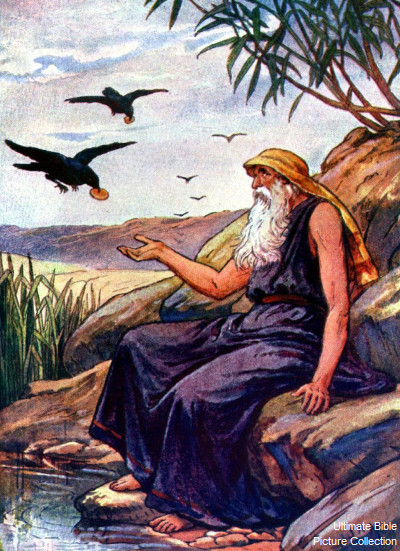
 4 ¶But he himself went a day’s journey into the wilderness, and came and sat down under a ajuniper tree: and he requested for himself that he might die; and said, It is enough; now, O Lord, take away my life; for I am not better than my fathers.
 5 And as he lay and slept under a juniper tree, behold, then an aangel touched him, and said unto him, Arise and eat.
 6 And he looked, and, behold, there was a cake baken on the coals, and a cruse of water at his head. And he did eat and drink, and laid him down again.
 7 And the angel of the Lord came again the second time, and touched him, and said, Arise and eat; because the journey is too great for thee.
  • What did Jezebel want to do about Elijah? Jezebel was planning on killing Elijah just as he had done to all the prophets.
  •  Where did Elijah go, and why? Elijah fled for his life, first to Beersheba and then continuing one day into the wilderness and rested under a juniper tree. I really like how in these verses it shows how Elijah's needs were taken care of by the Lord in a time when he was not able to fulfill those needs on his own. The Lord strengthened him physically and then went on to encourage him emotionally. We learn about that in the next few verses.
  • What did the Lord teach Elijah about revelation? Revelation comes in a still small voice rather than in a big and showy way.
1 Kings 19:11-12 
And he said, Go forth, and stand upon the mount before the Lord. And, behold, the Lord passed by, and a great and strong wind rent the mountains, and brake in pieces the rocks before the Lord;but the Lord was not in the wind: and after the wind an earthquake; but the Lord was not in the earthquake:  
And after the earthquake a fire; but the Lord was not in the fire: and after the fire a astill small bvoice.

Other scriptures about receiving revelation:
1 Nephi 17:45
 45 Ye are aswift to do iniquity but slow to remember the Lord your God. Ye have seen an bangel, and he spake unto you; yea, ye have heard his voice from time to time; and he hath spoken unto you in a still small voice, but ye were cpast feeling, that ye could not feel his words; wherefore, he has spoken unto you like unto the voice of thunder, which did cause the earth to shake as if it were to divide asunder.
Moroni 10:5
5 And by the power of the Holy Ghost ye may aknow the btruth of all things.      
Doctrine and Covenants 8:2–3
 2 Yea, behold, I will atell you in your mind and in your bheart, by the cHoly Ghost, which shall come upon you and which shall dwell in your heart.
 3 Now, behold, this is the spirit of revelation; behold, this is the spirit by which Moses abrought the children of Israel through the Red Sea on dry ground.
Luke 24:31–32
 31 And their eyes were opened, and they knew him; and he vanished out of their sight.
 32 And they said one to another, Did not our aheart bburn within us, while he ctalked with us by the way, and while he opened to us the scriptures?
Acts 2:37
 37 Now when they heard this, they were apricked in their bheart, and said unto Peter and to the rest of the apostles, Men and brethren, cwhat shall we do?

Revelation in my life:
These verses give us some insight into how the Spirit of the Lord might speak to us. We hear it in our mind and feel it in our heart. We feel a warm feeling in our heart. Our hearts may be pricked causing us to pay attention, this is important!
On occasion the Lord might share his word in a dramatic way, but most of the time it is a still small voice and we need to learn how to recognize it in our own lives. It is a skill we have to learn in order to have it be a conscious part of our lives. For me, I feel the guiding direction of the Spirit every day of my life. Depending on the purpose, it can be a slightly different experience. It can be a feeling of confidence that I am going the right direction and doing the right thing even when circumstances try to hedge the way. It can be an "ah-hah" moment as ideas and inspiration just seem to come together and click into place and forever change my view of a situation. This can happen with a wide variety of subjects and situations. It may be something I am learning in school, things I am studying just for personal interest, things I need to know for my personal life, health, emotional sanity, relationships, etc. It can happen when I have been really struggling to write or express my thoughts and then all of a sudden the words start to flow. When I am done I know it is good and just exactly what I wanted to say. Many times I also learn in the process things I didn’t know or understand before. It can be a witness of knowing what someone else had said is the truth or what I have read is the truth. It can be an answer to prayer through someone else’s words, a TV commercial, a book. Sometimes those answers come in the strangest places, but when I hear it, I know it is my answer. It can be a feeling that I need to make a phone call or do something, or prioritize one activity over something that I originally thought was more important. The spirit has also brought me feelings of comfort and peace in times of loss, hurt, and fearful situations. It also brings overwhelming feelings of joy in special times for myself or others that I get to witness or be a part of. It can be a voice of warning, or a knowing that I have been protected. The conscious awareness of the voice of the Spirit in my daily life brings a greater sense of gratitude and remembrance of the Lord in my life.


Sunday, July 27, 2014

Our most Important Heroic Journey

The plan of salvation is one of the very first things the missionaries teach an investigator. It is a simple basic understanding that every person who has lived on the earth has a capacity to understand because it is truth and it has been ingrained in our human culture from the beginning of time. It permeates our cultures in many ways. The basic plan teaches of the creation, the fall, redemption, and man’s journey through life.


Most cultures have a creation myth that explain how this world was brought into existence and teach elements of the truth. Included in many of them are God or gods, 7 periods of time, creation coming out of unorganized matter, man being created for some purpose, conflict between the Gods, and chaos being brought into order.

We can look at a comparison of the Enuma Elish from Mesopotamia and the Genesis creation account from the bible for an example. Both stories have a council of the gods that took place before the heavens and the earth were known. They both have a son of god who rebelled and led a war where many of the sons and daughters were lost. In each story, creation is an act of divine speech where chaos is brought to order through a series of steps. There is also correlation to what happens in each step. In the first step there is a division of the waters and in the fourth the sun, moon, and stars appear. Finally man is created to serve God and there is a sacrifice of one of the gods so the sins of mankind can be forgiven.


This brings us to the fallen state of man and the need for redemption. Most cultures recognize the fallen state of man, but they miss a key element of understanding brought back to us in the restoration of the gospel. The common belief is that man’s disobedience thwarted God’s plan and therefore men must be punished. The missing piece: providing opposition is a necessary part of the plan. It is only through opposition that man can achieve the wisdom to become as God. It was part of Heavenly Fathers plan for us so we could progress to become like Him and inherit all that he wanted to give us.
We see this misunderstanding represented in the art work throughout history. Many of the art pieces representing the fall of man show Adam and Eve being cast out of the garden into a dark threatening world. God’s finger is pointing at them to shame them. Eve is represented as a seductress and is connected to a snake representing Satan. She is hanging her head in shame. Adam is looking back at the garden with regret. We contrast this to a painting by an LDS artist that shows Adam and Eve walking out into the world hand in hand and with confidence in being able to face the challenges ahead. The Spirit guiding them is represented by a dove overhead. 

Redemption can be defined as being saved from sin or returning to grace. The need for redemption by tradition becomes a Band-Aid approach God had to apply because of the wickedness of men. In many cultures, you are chosen by the gods as one being special enough to deserve redemption. The fate would determine the outcome and there was not anything you could do to change fate. In contrast, as LDS, redemption is possible for all of us and comes because of the sacrifice Christ made for us. All of us will be resurrected, but only those who are willing to pay the price will return to live with God and inherit all that He wants to give us. Because Christ paid the ultimate price to fulfill the demands of justice, he can extend mercy to us and tell us the price he expects in return. That price is possible for all of us and everyone will eventually have the chance to accept or reject Christ’s offer.

The story of Oedipus is a classic example of not being able to change your fate. There was nothing the players in the story could do to reverse the eventual outcome that condemned Oedipus. This is still a common theme in some Christian cultures. In the movie God’s Not Dead, one of the Christian women basically told her brother, God doesn’t call out to you because some people aren’t worth saving. The Catholic practice of baptizing infants comes from a child being born into original sin as reflected in the choices Adam and Eve made that caused all of us to be fallen. If a child dies before they are baptized, there is no hope for them. As LDS believe, every person on earth will receive the unconditional redemption of resurrection and those who fulfill the requirements will receive the conditional redemption of exaltation.

The background knowledge of creation, the fall, and redemption, helps us understand the heroic journey each of us undertakes in our mortal life.  Many legends and myths as well as ancient and modern story telling express the monomyth cycle. It is also represented in symbolism in the many sacred places we find on earth and especially in the temples. The monomyth cycle includes: the call to be something greater, a journey with tests and trials, the threshold crossing that changes who we are, mentors and companions, the supreme challenge, the return or resurrection, and the final mastery of the two worlds (physical and spiritual).

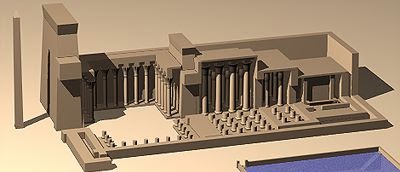
Each one of us has embarked on a heroic journey. The journey we are called to take is the mortal life on earth. We have left our heavenly home, will go through many tests and trials, and if we are successful will become a master of our two worlds and receive exaltation. The sacred places on earth give us connection to our ultimate destination and remind us of home. The circle in the square is symbolic of that connection between heaven and earth. Our journey is symbolically represented in the Egyptian temples, the tabernacle in the wilderness, Solomon’s temple, cathedrals, and our LDS temples. 

Throughout the history of time we have been shown the way in these temples. They each point to Christ as the central figure and the way of salvation. All of them include our beginning in creation, a way to overcome the fall, and ultimately receive redemption.


We can see from the many examples in our human history how the plan of salvation has been carried through the ages. It has been distorted and restored several times. The basic purpose of why we are here on earth is taught symbolically through many sources. The truth comes through in many ways. Heavenly Father does not leave us alone to figure it out for ourselves. We have mentors, companions, and instruction through symbolism. It is our most important heroic journey and one that each one of us can achieve with the help given if we will accept it.

Thursday, July 10, 2014

1 Samuel 18-26. Jonathan, Saul, David - Friendship, Betrayal, Loyalty and Respect

1 Samuel 18-26. David, Jonathan, Saul


David
Johnathan
Saul
  • Anointed to be king
  • Had the Spirit of the Lord
  • Trusted the Lord
  • Courage
  • Leader
  • Wise
  • Loved by the people
  • Humble
  • Sought the prophet
  • Loved Johnathan and respected Saul as King

  • Son of Saul
  • Good friend to David
  • Humble
  • Warned David of fathers plots
  • Advocate for David

  • King
  • Jealous
  • Sought to kill David
  • Fearful
  • Deceptive
  • Enemy of David


The relationship between David and Jonathan.
1 Samuel 18:1 And it came to pass, when he had made an end of speaking unto Saul, that the soul of Jonathan was aknit with the soul of David, and Jonathan loved him as his own soul.
 3 Then Jonathan and David made a acovenant, because he loved him as his own soul.
 4 And Jonathan stripped himself of the robe that was upon him, and gave it to David, and his garments, even to his sword, and to his bow, and to his girdle.
 1 Samuel 19:But Jonathan Saul’s son delighted much in David: and Jonathan told David, saying, Saul my father seeketh to kill thee: now therefore, I pray thee, take heed to thyself until the morning, and abide in a secret place, and hide thyself:
 4 ¶And Jonathan spake good of David unto Saul his father, and said unto him, Let not the king sin against his servant, against David; because he hath not sinned against thee, and because his works have been to thee-ward very good:
  1 Samuel 20:1 And David fled from Naioth in Ramah, and came and said before Jonathan, What have I done? what is mine iniquity? and what is my sin before thy father, that he seeketh my life? 2 And he said unto him, God forbid; thou shalt not die: behold, my father will do nothing either great or small, but that he will shew it me: and why should my father hide this thing from me? it is not so. 3 And David sware moreover, and said, Thy father certainly knoweth that I have found grace in thine eyes; and he saith, Let not Jonathan know this, lest he be grieved: but trulyas the Lord liveth, and as thy soul liveth, there is but a step between me and death. 4 Then said Jonathan unto David, Whatsoever thy soul adesireth, I will even do it for thee.40 And Jonathan gave his artillery unto his lad, and said unto him, Go, carry them to the city. 41 ¶And as soon as the lad was gone, David arose out of a place toward the south, and fell on his face to the ground, and bowed himself three times: and they kissed one another, and wept one with another, until David exceeded.
 42 And aJonathan said to David, Go in peace, forasmuch as we have sworn both of us in the name of the Lord, saying, The Lord be between me and thee, and between my seed and thy seed for ever. And he arose and departed: and Jonathan went into the city.
1 Samuel 23: 16 And aJonathan Saul’s son arose, and went to David into the wood, and strengthened his hand in God. 17 And he said unto him, Fear not: for the hand of Saul myfather shall not find thee; and thou shalt be king over Israel, andI shall be next unto thee; and that also Saul my father aknoweth.
 18 And they two made a covenant before the Lord: and David abode in the wood, and Jonathan went to his house. 
 Why do you think there was such a powerful friendship between David and Jonathan?
Johnathan was a righteous man and could see the unjust way his father was treating David. David won the respect of Johnathan by his righteous ways. Johnathan won the respect of David by his defending and helping David even though the natural thing for Johnathan would have been to treat David as a rival and want him to disappear. This shows the power righteousness can have even between two who might be natural enemies.

Saul’s treatment of David:
1 Samuel 18:10-11 (note JST of verse 10)
 10 And it came to pass on the morrow, that the evil spirit afrom God (JST 1 Sam. 18:10 … which was not of God …) came upon Saul, and he prophesied in the midst of the house: and David played with his hand, as at other times: and there was a javelin in Saul’s hand.
 11 And Saul cast the javelin; for he said, I will smite David even to the wall with it. And David avoided out of his presence twice.
19:9-12
 9 And the evil spirit afrom the Lord was upon Saul, as he sat in his house with his javelin in his hand: and David played with his hand.
 10 And Saul sought to smite David even to the wall with the javelin; but he slipped away out of Saul’s presence, and he smote the javelin into the wall: and David fled, and escaped that night. 11 Saul also sent messengers unto David’s house, to watch him, and to slay him in the morning: and Michal David’s wife told him, saying, If thou save not thy life tonight, tomorrow thou shalt be slain. 12 So Michal let David down through a window: and he went, and fled, and escaped.
24:1-2
 1 And it came to pass, when Saul was returned from following the Philistines, that it was told him, saying, Behold, David is in the wilderness of En-gedi.
 2 Then Saul took three thousand chosen men out of all Israel, and went to seek David and his men upon the rocks of the wild goats.

David’s treatment of Saul:
Chapter 24
David finds Saul in a cave and spares his life—Saul confesses that David is more righteous than he—David swears that he will not cut off the seed of Saul
4 And the men of David said unto him, Behold the day of which the Lord said unto thee, Behold, I will deliver thine enemy into thine hand, that thou mayest do to him as it shall seem good unto thee. Then David arose, and cut off the askirt of Saul’s robe bprivily. 5 And it came to pass afterward, that David’s heart smote him, because he had cut off Saul’s skirt.
 6 And he said unto his men, The Lord forbid that I should do this thing unto my master, the Lord’s anointed, to stretch forth mine hand against him, seeing he is the aanointed of the Lord.
 7 So David stayed his servants with these words, and suffered them not to rise against Saul. But Saul rose up out of the cave, and went on his way.
 8 David also arose afterward, and went out of the cave, and cried after Saul, saying, My lord the king. And when Saul looked behind him, David stooped with his face to the earth, and bowed himself.
 9 ¶And David said to Saul, Wherefore hearest thou men’s words, saying, Behold, David seeketh thy hurt? 10 Behold, this day thine eyes have seen how that the Lord had delivered thee to day into mine hand in the cave: and some bade me kill thee: but mine eye aspared thee; and I said, I will not put forth mine hand against my lord; for he is the bLord’s anointed. 11 Moreover, my father, see, yea, see the skirt of thy robe in my hand: for in that I cut off the skirt of thy robe, and killed thee not, know thou and see that there is neither evil nor transgression in mine hand, and I have not sinned against thee; yet thou huntest my soul to take it. 12 The Lord ajudge between me and thee, and the Lord avenge me of thee: but mine hand shall not be upon thee. 13 As saith the proverb of the ancients, aWickedness proceedeth from the wicked: but mine hand shall not be upon thee.
 14 After whom is the king of Israel come out? after whom dost thou pursue? after a dead dog, after a flea.
 15 The Lord therefore be judge, and judge between me and thee, and see, and plead my cause, and deliver me out of thine hand.
Chapter 26
David again spares Saul’s life—He again refuses to stretch forth his hand against the Lord’s anointed—Saul and David separate.
 5 ¶And David arose, and came to the place where Saul had pitched: and David beheld the place where Saul lay, and Abner the son of Ner, the captain of his host: and Saul lay in the atrench, and the people pitched round about him. 6 Then answered David and said to Ahimelech the Hittite, and to Abishai the son of Zeruiah, brother to Joab, saying, Who will go down with me to Saul to the camp? And aAbishai said, I will go down with thee. 7 So David and Abishai came to the people by night: and, behold, Saul lay sleeping within the trench, and his spear stuck in the ground at ahis bolster: but Abner and the people lay round about him. 8 Then said Abishai to David, God hath delivered thine enemy into thine hand this day: now therefore let me smite him, I pray thee, with the spear even to the earth at once, and I will not smite him the second time. 9 And David said to Abishai, Destroy him not: for awho can stretch forth his hand against the Lord’s anointed, and be guiltless? 10 David said furthermore, As the Lord liveth, the Lord shall smite him; or his day shall come to adie; or he shall descend into battle, and perish. 11 The Lord forbid that I should stretch forth mine hand against the Lord’s anointed: but, I pray thee, take thou now the spear that is at his bolster, and the cruse of water, and let us go. 12 So David took the spear and the cruse of water from Saul’s bolster; and they gat them away, and no man saw it, nor knew it, neither awaked: for they were all asleep; because a adeep sleep from the Lord was fallen upon them. 13 ¶Then David went over to the other side, and stood on the top of an hill afar off; a great space being between them: 14 And David cried to the people, and to Abner the son of Ner, saying, Answerest thou not, Abner? Then Abner answered and said, Who art thou that criest to the king? 15 And David said to Abner, Art not thou a valiant man? and who is like to thee in Israel? wherefore then hast thou not kept thy lord the king? for there came one of the people in to destroy the king thy lord. 16 This thing is not good that thou hast done. As the Lord liveth, ye are worthy to die, because ye have not kept your master, the Lord’s anointed. And now see where the king’s spear is, and the cruse of water that was at his bolster. 17 And Saul knew David’s voice, and said, Is this thy voice, my son David? And David said, It is my voice, my lord, O king. 18 And he said, Wherefore doth my lord thus pursue after his servant? for what have I done? or what evil is in mine hand? 19 Now therefore, I pray thee, let my lord the king hear the words of his servant. If the Lord have stirred thee up against me, let him accept an offering: but if they be the children of men, cursed be they before the Lord; for they have driven me out this day from abiding in the inheritance of the Lord, saying, Go, serve other gods. 20 Now therefore, let not my blood fall to the earth before the face of the Lord: for the king of Israel is come out to seek a flea, as when one doth hunt a partridge in the mountains. 21 ¶Then said Saul, I have sinned: return, my son David: for I will no more do thee harm, because my soul was aprecious in thine eyes this day: behold, I have played the fool, and have erred exceedingly. 22 And David answered and said, Behold the king’s spear! and let one of the young men come over and fetch it. 23 The Lord render to every man his arighteousness and his faithfulness: for the Lord delivered thee into my hand to day, but I would not stretch forth mine hand bagainst the Lord’s anointed.
 24 And, behold, as thy life was much set by this day in mine eyes, so let my life be much set by in the eyes of the Lord, and let him deliver me out of all atribulation.
 25 Then Saul said to David, Blessed be thou, my son David: thou shalt both do great things, and also shalt still prevail. So David went on his way, and Saul returned to his place.

  1 Samuel 24:10. “I Will Not Put Forth Mine Hand against … the Lord’s Anointed”
This chapter exhibits an aspect of David’s character that is much to be admired. Although anointed by God’s prophet to be king of Israel, and although Saul constantly sought his life, this chosen servant of the Lord still would not lift his hand against Saul so long as Saul lived (see vv. 5–6). David understood an important priesthood principle, that is, that one has loyalty to those called by the Lord to preside even when they may not function perfectly in their calling. Saul was failing miserably, but David knew that it was the Lord’s responsibility to remove Saul, not his. OT Manual

What does David’s statement in 1 Samuel 26:23 tell us about his actions?
23 The Lord render to every man his arighteousness and his faithfulness: for the Lord delivered thee into my hand to day, but I would not stretch forth mine hand bagainst the Lord’s anointed
David understood that it was not his place to seek vengeance for the unjust way the king was treating him. Instead he respected Saul’s position as King and left the judgment up to the Lord.

Write a paragraph explaining who the Lord’s anointed are today. Then explain how you could apply David’s example toward the Lord’s anointed in both word and deed.
The Lords anointed today is our prophet and president of the church, Thomas S Monson. It also includes the apostles and other church leaders including our local leader, the bishop of our ward (congregation). We may struggle from time to time with the counsel our leaders give us or with the way they handle an issue that may affect us directly. Especially when it comes to our bishop, we may see him as an imperfect person and think that things should have been handled differently or that he should not be acting in a particular way. We still have an obligation to respect the office of his calling and respond accordingly. If we have issue with the bishop, we can take it to him and discuss it and if we see glaring unrighteousness, we have a responsibility to take it to higher authorities. Then it is put in the Lord’s hands and we need to let go of the outcome and continue to respect the authority of the calling. The Lord who sees a greater perspective than we do will handle the situation in the most appropriate way. And if we are hurt in the situation, then we have the comforting power of the atonement to heal us. David is an excellent example of this. His life was threatened by his priesthood leader, yet he still honored the authority of the calling and left the judgment to the Lord. More specifically; we can honor those callings by not taking offense, continuing our church attendance, accepting callings and fulfilling those callings to the best of our ability. We also need to speak of our leaders with positive and encouraging words instead of criticism for the things we don’t think they are doing right. Focusing on the positive will help both us and them become better people.